
Dualship - Visual System Design for Distributed APIs
Dualship - Visual System Design for Distributed APIs
Dualship - Visual System Design for Distributed APIs
Dualship is a visual API builder that lets teams design, execute, and monitor APIs as live systems combining AI-assisted creation, plugin-based integrations, and a runtime-first architecture.
Website
coming soon
Website
coming soon
Website
coming soon
Overview
Overview
Overview
Modern teams rely on APIs for everything, yet creating and operating them still requires writing backend code, managing deployments, syncing documentation, and jumping across multiple tools.
Dualship explores a different approach:
What if APIs could be designed visually, executed instantly, and monitored as living systems?
Starting with the problem
Starting with the problem
Starting with the problem
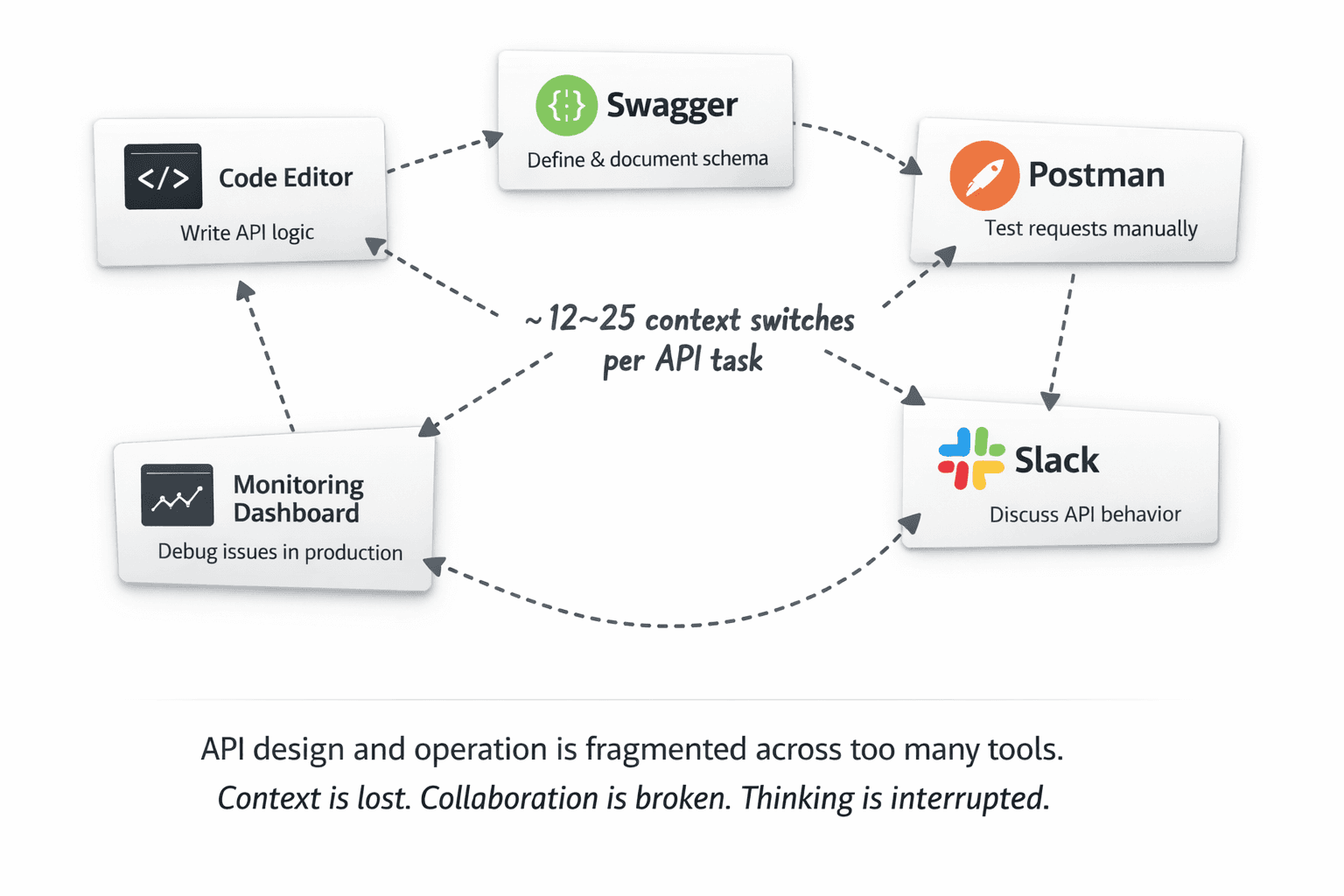
Most API tooling optimizes for specification accuracy, not system comprehension. In practice, teams struggle with:
Designing APIs across multiple tools (editors, docs, testing, monitoring)
Keeping documentation in sync with real behavior
Reasoning about API logic once it grows beyond a few endpoints
Collaborating across engineers, product managers, and designers
Operating APIs after deployment, not just defining them
Sales deck and enablement tools
Design Goal
Design Goal
Design Goal
Design an interface that allows teams to create, reason about, and operate APIs as living systems, without requiring them to write or deploy backend code.
Design an interface that allows teams to create, reason about, and operate APIs as living systems, without requiring them to write or deploy backend code.
Key Product Capabilities
Key Product Capabilities
Key Product Capabilities
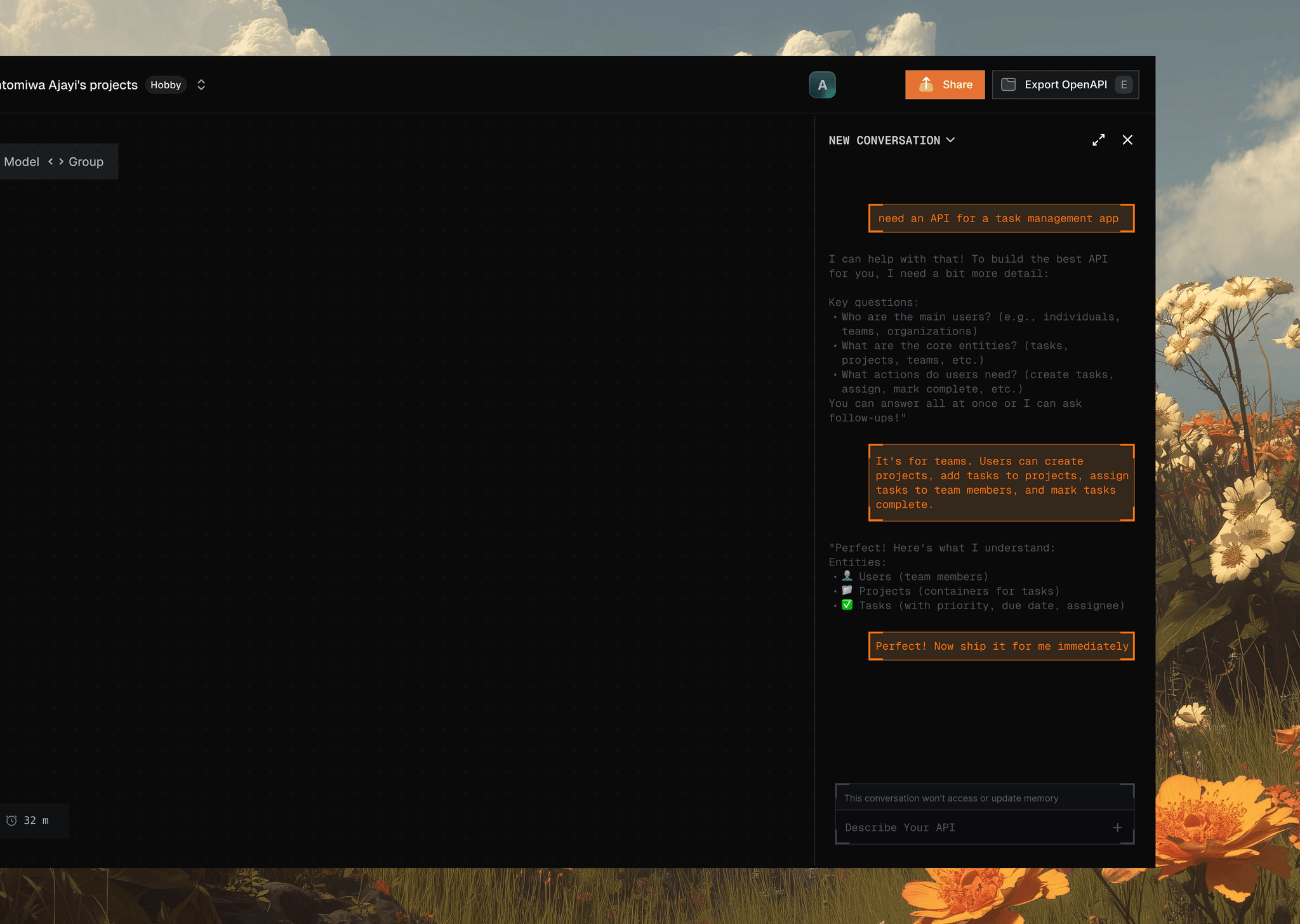
1. AI-Assisted API Creation
1. AI-Assisted API Creation
1. AI-Assisted API Creation
The system translates intent into:
endpoints
data models
flow logic
required integrations
AI output is constrained to verified building blocks, keeping results predictable and production-safe.
The system translates intent into:
endpoints
data models
flow logic
required integrations
AI output is constrained to verified building blocks, keeping results predictable and production-safe.
2. Visual Flow Builder (Canvas)
2. Visual Flow Builder (Canvas)
2. Visual Flow Builder (Canvas)
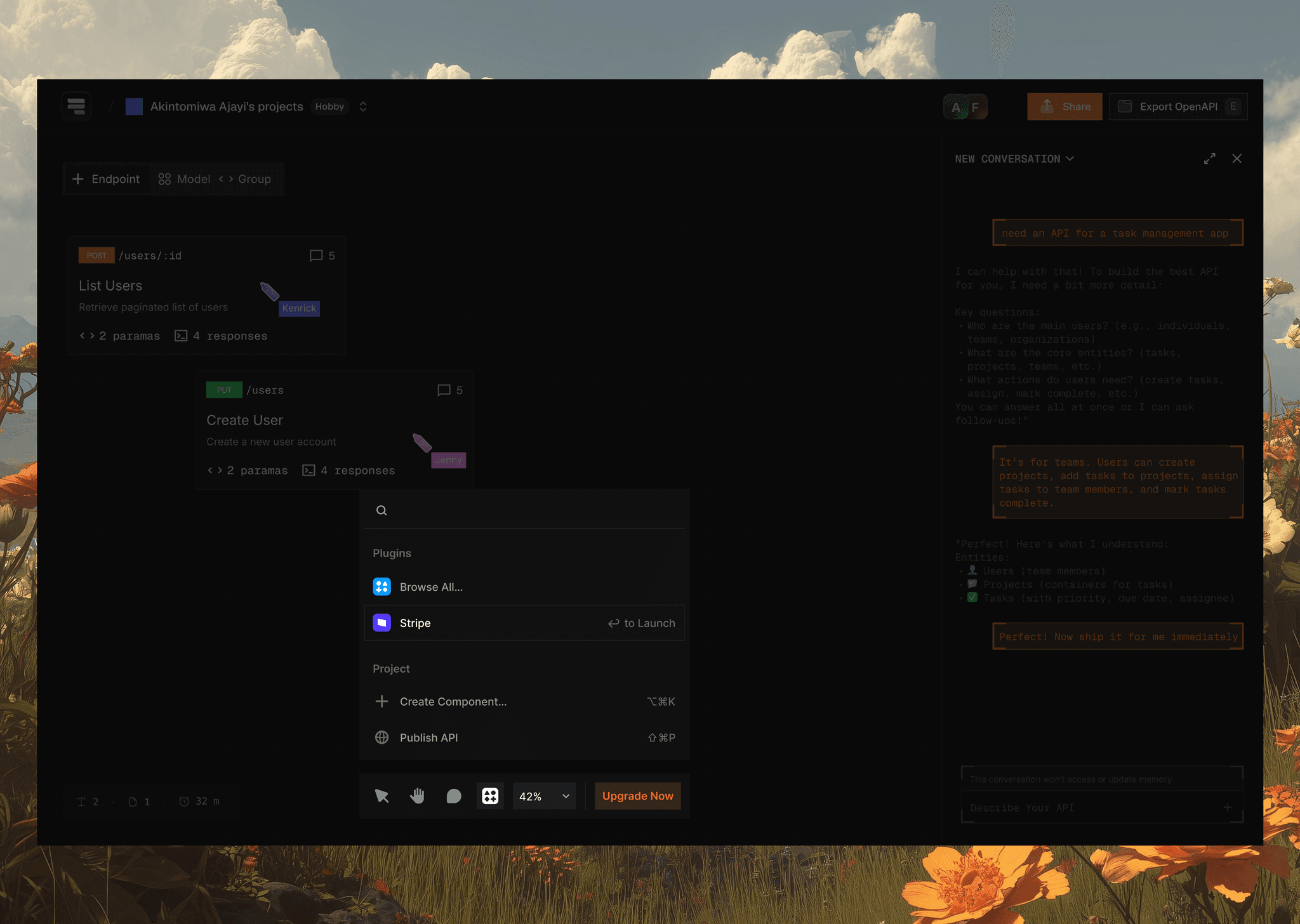
The primary interface is an infinite canvas where APIs are assembled visually.
Each node represents a single responsibility (validation, logic, plugin call, response)
Nodes execute sequentially or in parallel
Conditional branches and middleware are visually explicit
Data flows through a shared execution context
The primary interface is an infinite canvas where APIs are assembled visually.
Each node represents a single responsibility (validation, logic, plugin call, response)
Nodes execute sequentially or in parallel
Conditional branches and middleware are visually explicit
Data flows through a shared execution context
3. Plugin-Based Integrations
3. Plugin-Based Integrations
3. Plugin-Based Integrations
External services (Stripe, databases, email, messaging) are accessed through plugins. Each plugin defines:
credentials
supported actions
input/output schemas
This creates a controlled integration layer that:
reduces errors
standardizes behavior
keeps flows readable
External services (Stripe, databases, email, messaging) are accessed through plugins. Each plugin defines:
credentials
supported actions
input/output schemas
This creates a controlled integration layer that:
reduces errors
standardizes behavior
keeps flows readable
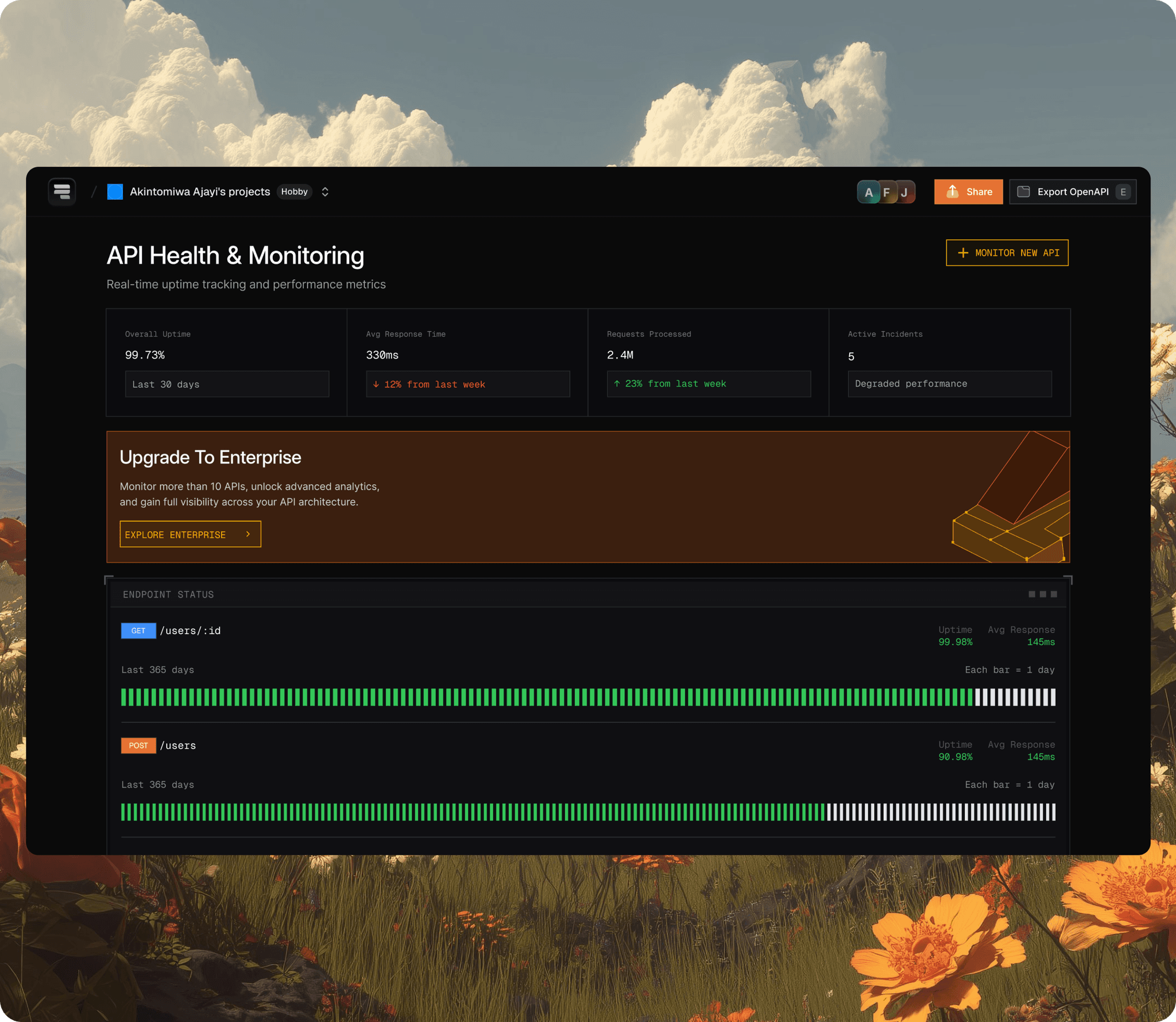
4. Built-In Monitoring & Health
4. Built-In Monitoring & Health
4. Built-In Monitoring & Health
APIs don’t end at deployment.
Dualship treats monitoring as a first-class feature:
uptime
response times
error rates
degradation signals
Metrics are surfaced alongside API definitions, reinforcing the idea that design decisions directly affect system health.
APIs don’t end at deployment.
Dualship treats monitoring as a first-class feature:
uptime
response times
error rates
degradation signals
Metrics are surfaced alongside API definitions, reinforcing the idea that design decisions directly affect system health.
5. A Concrete API Surface Generated from Flows
5. A Concrete API Surface Generated from Flows
5. A Concrete API Surface Generated from Flows
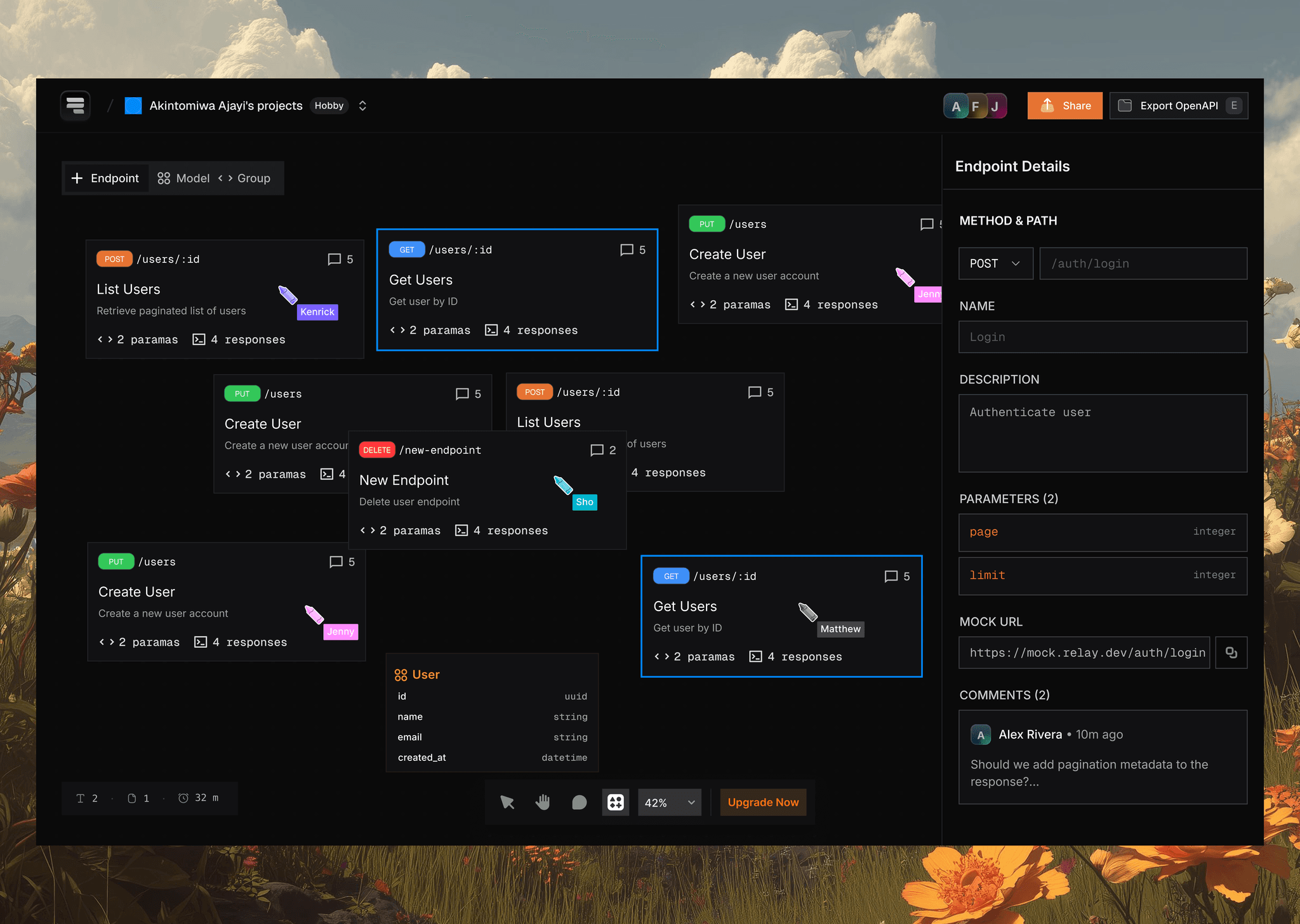
When a flow is composed on the canvas, Dualship materializes it into a structured API surface that engineers can immediately inspect and interact with. This User Management API is not manually written or documented. It is the direct result of the underlying flow definition being interpreted by the runtime. The interface exposes the method, route, parameters, and response structure in a way that reflects the actual behavior of the system.
When a flow is composed on the canvas, Dualship materializes it into a structured API surface that engineers can immediately inspect and interact with. This User Management API is not manually written or documented. It is the direct result of the underlying flow definition being interpreted by the runtime. The interface exposes the method, route, parameters, and response structure in a way that reflects the actual behavior of the system.

6. Live Endpoint Testing
6. Live Endpoint Testing
6. Live Endpoint Testing
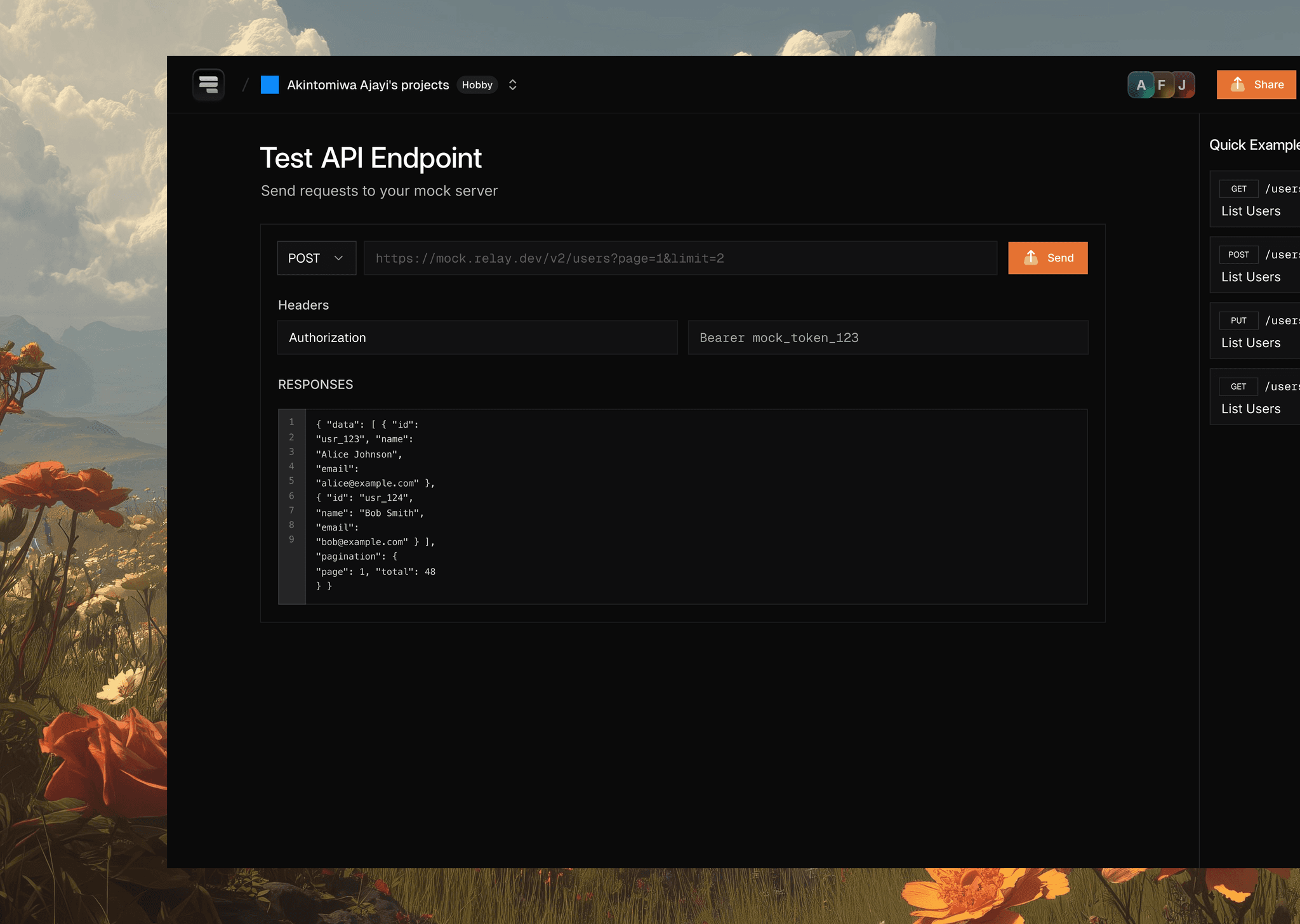
An integrated testing environment that lets users send authenticated requests to their generated APIs and inspect real responses instantly. By embedding request testing directly into the platform, Dualship removes the need for external tools like Postman and shortens the feedback loop between API design and validation.
An integrated testing environment that lets users send authenticated requests to their generated APIs and inspect real responses instantly. By embedding request testing directly into the platform, Dualship removes the need for external tools like Postman and shortens the feedback loop between API design and validation.
Frictionless Onboarding & Workspace Setup
Frictionless Onboarding & Workspace Setup
Frictionless Onboarding & Workspace Setup
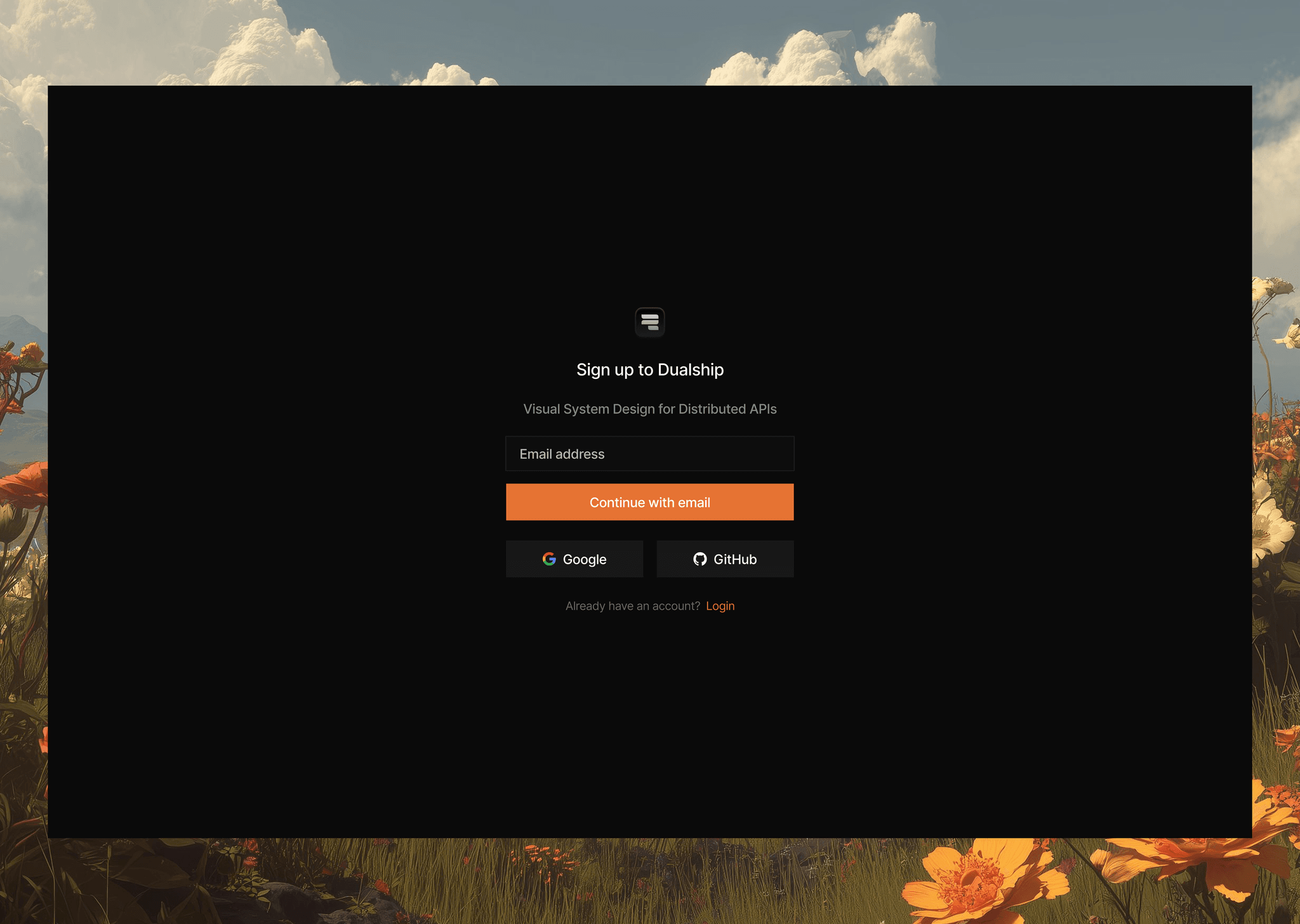
Users can sign up instantly with GitHub or Google and create a shared workspace in seconds. This lightweight onboarding flow is designed to get teams into the canvas quickly, where they can start building APIs and invite collaborators without setup overhead or infrastructure configuration.
Users can sign up instantly with GitHub or Google and create a shared workspace in seconds. This lightweight onboarding flow is designed to get teams into the canvas quickly, where they can start building APIs and invite collaborators without setup overhead or infrastructure configuration.

Designing Dualship reinforced a belief I’ve come to value deeply: the best developer tools don’t add more capability, they reduce the effort required to understand complex systems. APIs are often treated as technical artifacts defined by code and documentation. Through this project, I explored how they can instead be treated as living systems that teams can design, reason about, and operate visually. By combining a runtime-first architecture, visual composition, controlled integrations, and integrated monitoring, Dualship demonstrates how thoughtful abstractions can make complex infrastructure feel approachable without sacrificing precision. This project reflects how I approach design problems: Start from how systems behave, not how interfaces look Prioritize clarity over feature count Design for collaboration across technical and non-technical roles Consider the full lifecycle: creation, usage, and operation Dualship is ultimately an exploration of how better abstractions can change how teams build and maintain software.
Designing Dualship reinforced a belief I’ve come to value deeply: the best developer tools don’t add more capability, they reduce the effort required to understand complex systems. APIs are often treated as technical artifacts defined by code and documentation. Through this project, I explored how they can instead be treated as living systems that teams can design, reason about, and operate visually. By combining a runtime-first architecture, visual composition, controlled integrations, and integrated monitoring, Dualship demonstrates how thoughtful abstractions can make complex infrastructure feel approachable without sacrificing precision. This project reflects how I approach design problems: Start from how systems behave, not how interfaces look Prioritize clarity over feature count Design for collaboration across technical and non-technical roles Consider the full lifecycle: creation, usage, and operation Dualship is ultimately an exploration of how better abstractions can change how teams build and maintain software.